Monthly Archives: April 2012

Push the big red button

Previous articles in this blog have highlighted the qualities that are needed in order for a video to viral (see article: “What makes a video go viral?”) What is it that makes videos go viral and reach millions of viewers on the Web? There are three key factors required to achieve success:

  1. Reaching the tastemakers
  2. Building a community of participation
  3. Creating unexpectedness in the video

It is a simple formula in principle, but it is extremely complex to produce in reality. Yet, marketers and advertisers try time and again – usually in vain – to hit the right formula. However, a recent video segment produced by agency Duvall Guillame Modern managed to achieve all the right elements in its video to launch TNT network in Belgium.

It started by placing a big red push button with the label “Push to add drama” in a town square in an average Flemish town. And then waited to see what happened next. The results were amazing. As of the beginning of May 2012, there have been nearly 32 million views!

See what happens when YOU push the big red button…

 

Group Activities and Discussion Questions:

  1. Show the Ted Talks video featuring Kevin Allocca from YouTube discussing the concepts of viral videos: http://www.ted.com/talks/kevin_allocca_why_videos_go_viral.html.
  2. Next, show the TNT Belgium video: http://youtu.be/316AzLYfAzw
  3. What are the elements of this video that created a viral sensation? How does this fit with the principles discussed in the Kevin Allocca presentation?
  4. What is the key message of the Belgium video?
  5. How could other TV channels or shows create something similar?
  6. Have students discuss how this might be done for shows such as CSI, American Idol, Simpsons, sports teams, and other shows.
  7. Ask students what videos they have seen and forwarded on to others. What was it about those videos that sparked their interest and desire to share?
  8. BONUS: Want to know the most viewed videos on YouTube? Go to this link and select from several options: http://www.youtube.com/charts

Source: Source: Ad Age Daily, Creativity Online, 4/12/12

Leave a comment

Filed under Classroom Activities

Privacy lost

Earlier this year, Mozilla Corp. CEO Gary Kovacs gave a Ted Talk where he discussed our loss of privacy when using the Internet. Sure, most of us know that companies keep track of us when we visit. They track what we buy, size, color, price and more. Amazon knows what types of books we like to buy, Zappos knows our shoe shopping habits, Nike tracks our sneaker purchases, and countless other sites “remember us” when we visit their sites; many of them are quite happy to suggest future purchases that might interest us. Most of the time, this is fine. As savvy consumers who frequently use the Internet, we expect companies to gather data to use in their marketing and analysis. And, as marketers ourselves, we know there is gold in the databases.

However, has behavioral tracking gone too far? In this fascinating video, Kovacs introduces a new Firefox add-on program called “Collusion.” Collusion gives the user the visual capability to “track the trackers” – in other words, watch how often our online traffic is monitored by parties to whom we have not given express permission to do so. The scope of the behavioral tracking will likely surprise even the most experienced Web user.


Group Activities and Discussion Questions:

  1. Play the video on Ted.com with the Gary Kovacs speech: http://www.ted.com/talks/gary_kovacs_tracking_the_trackers.html
  2. Next, bring up the Mozilla explanation of data tracking and Collusion: http://www.mozilla.org/en-US/collusion/
  3. Class discussion topics: What are the ethical implications of behavioral tracking? When is it useful to companies? Useful to consumers?
  4. What are the responsibilities of companies to their users? Should they ask permission? Or do users give implied permission just by visiting the site?
  5. What are the laws or regulations that affect this type of behavioral tracking? What should the laws cover?
  6. Ask students if they would be willing to install the application and report on what happens in a future class.

Source:  Ted.com, May 2012

Leave a comment

Filed under Classroom Activities

Kickstart for Pebble Watch

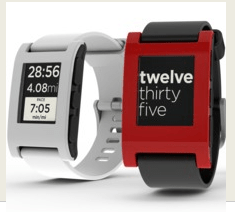
Conventional funding wisdom tells businesses that in order for a new company or product to get started, it needs a strong influx of capital from traditional sources such as financial firms, banks, angel investors, or venture capital firms. But working with Kickstarter, the innovative Pebble watch is turning all those rules on their head and into, well, tiny pebbles on a beach.

The Pebble e-paper watch has generated an unexpectedly large following to help get its innovative product into production. Using wireless, Bluetooth technology, the watch communicates with smartphones such as iPhone and Android devices, as well as with iPod music players. The product’s uses range from the mundane, such as telling time, to more exciting interactive applications for running, cycling, golf, emails, text messaging, and more.


After the founders of Pebble failed to get conventional funding, they turned to Kickstarter to get their message directly to consumers. As of the beginning of May 2012, Pebble has received more than $8.8 million in pledges from 58,000+ backers. Pledges range from a low of $99 (sold out) to a high of $10,000.

Kickstarter is a funding platform for innovative and creative products. Using social media to directly interact with users, the site helps link new ideas with people who are interested in funding and buying the products. Launched in 2009, the company has helped connect 1.8 million people with more than 20,000 innovative products, raising pledges of more than $200 million.

Yes, the Internet does indeed change everything, including how businesses build communities to fund and support their vision. Visit Kickstarter.com to learn more about new products and new ways to generate funding.

Group Activities and Discussion Questions: 

  1. Start the discussion by showing the video about Pebble: http://www.kickstarter.com/projects/597507018/pebble-e-paper-watch-for-iphone-and-android
  2. What makes this product unique?
  3. What are the key messages?
  4. Who is the target market for this product?
  5. What challenges does Pebble have with distribution and channel?
  6. How should the product be promoted?
  7. Next, move to a discussion about Kickstarter and its funding approach: http://www.kickstarter.com/
  8. Have students search the site to learn about the variety of products and groups using the site to raise funds.
  9. What are the products that most interest the students? What other uses can they see for utilizing the site?

Source: New York Time, Forbes, Manufacturing Business Technology, Forbes, and other news services


Leave a comment

Filed under Classroom Activities