Did you just finish your final exams when you started seeing ads for back-to-school shopping? Back-to-school marketing now begins while many students are still thinking about summer. Although the timing may feel premature, it demonstrates how marketers adapt to changes in customer behavior.
Rising prices have encouraged shoppers to plan purchases earlier, monitor promotions, and spread spending across several weeks. Deloitte identifies 31% of parents as “hyper-value seekers” who use four or more money-saving strategies. Interestingly, these shoppers expect to spend more than other consumers. This distinction illustrates an important marketing principle: customers seeking value are not necessarily searching for the lowest price. They may value price certainty, product quality, convenience, rewards, or reduced decision-making effort.
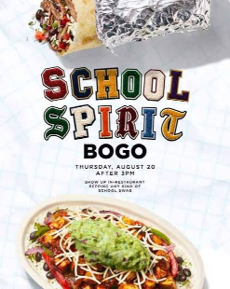
Retailers are responding with more than discounts. JCPenney’s Price Lock reduces uncertainty, while brands such as Target and American Eagle use creators to reach particular communities and interests. AI shopping assistants add another layer of value by helping customers compare products and locate deals. Together, these tactics allow marketers to connect with customers at different points in an increasingly fragmented purchase journey. Restaurants are also treating back-to-school as a customer need rather than simply a retail event. Family meals, advance ordering, loyalty rewards, and after-school promotions address the time pressure families experience when school resumes. The product is food, but the value proposition may be convenience, relief, or one less decision at the end of a demanding day.
The most effective back-to-school marketers therefore do more than move the season forward. They identify what customers are experiencing from budget pressure, busy schedules, or information overload – and design offers that make life easier. That is how a seasonal promotion can become the beginning of a lasting customer relationship.
Discussion Questions
- Using the 2026 Deloitte Back-to-School Survey, what finding offers the strongest marketing opportunity? Explain your choice.
- Is starting back-to-school promotions in June responsive to customers, or can it create promotional fatigue?
- Why might the “hyper-value seekers” described in the Marketing Dive article, spend more than shoppers who use fewer cost-saving strategies?
- Which creates greater customer value: a lower price, a price guarantee, convenience, personalization, or loyalty rewards?
- How can marketers appeal to both parents purchasing necessities and students influencing discretionary purchases?
Student Activities
- Investigate the market.Compare the National Retail Federation’s 2026 findings with the Deloitte survey. Develop one customer insight and turn it into a promotional concept for a retailer or restaurant.
- Redesign the offer. Select one restaurant promotion from Article 3. Redesign it to create an ongoing customer relationship rather than a single transaction. Identify the target market, customer need, value proposition, and retention mechanism.
- Map the customer journey. In teams, map a student’s back-to-school journey from need recognition through post-purchase evaluation. Add one appropriate marketing touchpoint involving a creator, an AI tool, a store, and a loyalty program.
Sources:
Adams, Peter (2026, August 18). Brands shake up back-to-school marketing to reach “hyper value-seekers.” Marketing Dive; Deloitte (2026). 2026 Deloitte back-to-school survey. Deloitte Insights; Kelso, Alicia, (2026, August 20) Restaurant chains rush to meet the back-to-school crowd. Restaurant Business; Nassauer, Sara (2026, June 20), Why back-to-school deals are already here. The Wall Street Journal.


