
Tag Archives: customer value

DoorDash. It’s More than a Meal

What if your next DoorDash order says more about your lifestyle than your appetite? Consumer behavior is changing, and marketers must look beyond what people buy to understand why they buy it. Boston Consulting Group’s 2026 research identifies five enduring themes: value over price, the longevity mindset, solo living, a new trust compass, and AI-guided decision making. Together, these themes suggest that convenience is no longer simply about saving money or time. It is about fitting products and services into the lives consumers want to live.

DoorDash offers a useful example. In Canada, Hard Work Club’s “Your Door to More” campaign positioned delivery as a spontaneous break from monotony rather than a luxury. Its dancing customers included parents feeding children and a couple waiting for medicine. The message was emotional as well as functional demonstrating that delivery can help people manage everyday challenges and create moments of relief.

DoorDash’s workplace business shows another shift. According to Fast Casual, companies increasingly use meal benefits to support employee satisfaction, office attendance, and talent outcomes. The same service that delivers dinner to a student’s apartment can also help an employer coordinate meals for a hybrid workforce. Marketers know that segmentation should consider changing lifestyles and consumer behaviors, not just demographics. A solo student, a busy parent, and a remote employee may all value delivery, but for different reasons. Effective marketing identifies those motivations and builds a value proposition around them. As future marketers, ask yourself: Is DoorDash selling food, convenience, time, connection, or all four? The answer may depend less on the product than on the consumer’s situation.

Discussion Questions and Activities

  1. How does DoorDash’s “Your Door to More” campaign ad use emotional benefits to change consumer perceptions of delivery?
  2. Which of BCG’s five consumer themes best explains the growth of delivery services? Defend your choice.
  3. How might DoorDash’s marketing differ for a college student, a solo-living professional, and a company purchasing workplace meals?
  4. Segment the Customer. In small groups, create three DoorDash customer profiles. Name the profile, then identify each customer’s needs, perceived value, and most persuasive marketing message. Share your results with the class.
  5. Convenience Marketing Challenge. Ask students to compare how different brands respond to changing consumer needs and develop a marketing idea based on their findings.

Sources

Bharadwaj, Aparna., et al. (2026, August 26) Global consumers have moved on. Has your growth strategy caught up? Boston Consulting Group; Pasquarelli, Adrianne (2026, July 23) Hard Work Club is changing consumer behavior, Ad Age; Fast Casual (2026, September 4) DoorDash: Workplace meals help bring employees back to the office, Fast Casual.
Leave a comment

Filed under Classroom Activities

Bargains, Backpacks, and Brand Loyalty

Did you just finish your final exams when you started seeing ads for back-to-school shopping? Back-to-school marketing now begins while many students are still thinking about summer. Although the timing may feel premature, it demonstrates how marketers adapt to changes in customer behavior.

Rising prices have encouraged shoppers to plan purchases earlier, monitor promotions, and spread spending across several weeks. Deloitte identifies 31% of parents as “hyper-value seekers” who use four or more money-saving strategies. Interestingly, these shoppers expect to spend more than other consumers. This distinction illustrates an important marketing principle: customers seeking value are not necessarily searching for the lowest price. They may value price certainty, product quality, convenience, rewards, or reduced decision-making effort.

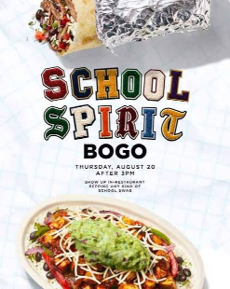
Retailers are responding with more than discounts. JCPenney’s Price Lock reduces uncertainty, while brands such as Target and American Eagle use creators to reach particular communities and interests. AI shopping assistants add another layer of value by helping customers compare products and locate deals. Together, these tactics allow marketers to connect with customers at different points in an increasingly fragmented purchase journey. Restaurants are also treating back-to-school as a customer need rather than simply a retail event. Family meals, advance ordering, loyalty rewards, and after-school promotions address the time pressure families experience when school resumes. The product is food, but the value proposition may be convenience, relief, or one less decision at the end of a demanding day.

The most effective back-to-school marketers therefore do more than move the season forward. They identify what customers are experiencing from budget pressure, busy schedules, or information overload – and design offers that make life easier. That is how a seasonal promotion can become the beginning of a lasting customer relationship.

Discussion Questions

  1. Using the 2026 Deloitte Back-to-School Survey, what finding offers the strongest marketing opportunity? Explain your choice.
  2. Is starting back-to-school promotions in June responsive to customers, or can it create promotional fatigue?
  3. Why might the “hyper-value seekers” described in the Marketing Dive article, spend more than shoppers who use fewer cost-saving strategies?
  4. Which creates greater customer value: a lower price, a price guarantee, convenience, personalization, or loyalty rewards?
  5. How can marketers appeal to both parents purchasing necessities and students influencing discretionary purchases?

Student Activities

  1. Investigate the market.Compare the National Retail Federation’s 2026 findings with the Deloitte survey. Develop one customer insight and turn it into a promotional concept for a retailer or restaurant.
  2. Redesign the offer. Select one restaurant promotion from Article 3. Redesign it to create an ongoing customer relationship rather than a single transaction. Identify the target market, customer need, value proposition, and retention mechanism.
  3. Map the customer journey. In teams, map a student’s back-to-school journey from need recognition through post-purchase evaluation. Add one appropriate marketing touchpoint involving a creator, an AI tool, a store, and a loyalty program.

Sources:

Adams, Peter (2026, August 18). Brands shake up back-to-school marketing to reach “hyper value-seekers.” Marketing Dive; Deloitte (2026). 2026 Deloitte back-to-school survey. Deloitte Insights; Kelso, Alicia, (2026, August 20) Restaurant chains rush to meet the back-to-school crowd. Restaurant Business; Nassauer, Sara (2026, June 20), Why back-to-school deals are already here. The Wall Street Journal.

Leave a comment

Filed under Classroom Activities

Wearable Wellness

Have you ever thought about how the products people choose reflect their values and desires? In today’s dynamic marketplace, organizations are marketing experiences and lifestyles that resonate with an increasingly health-conscious consumer base. This reflects marketers’ need to create genuine value for customers. Recent examples highlighting this in practice are Nike’s new Mind footwear line and innovative wellness apparel, both drawing connections between physical products and mental well-being.

Nike’s Mind 001 and 002 shoes represent a groundbreaking approach to performance gear, utilizing sensory nodes designed to enhance mental clarity, focus, and cognitive engagement. Discovering and meeting customer needs can extend beyond traditional research methods. Nike launched its Mind Science department in 2023 to extend research into the mind-body connection and tap into athletes’ and everyday consumers’ focus on mental preparation to enhance physical performance.

Similarly, brands like Coperni and Elastique are redefining clothing by integrating skin-care benefits into everyday wear, crafting a concept where fashion meets self-care. This trend emphasizes the importance of building genuine customer relationships through innovation. By aligning products with consumer desires for health, wellness, and improved quality of life, brands stand out in a crowded market. Consumers today prioritize products that contribute to their overall wellness, showcasing a desire for deeper, value-laden connections with brands.

As these examples demonstrate, the marketing landscape is evolving. Innovations like Nike’s Mind shoes and wellness-integrated apparel highlight the emotional and psychological connections created by marketers’ efforts to meet customers’ unmet needs. In this wellness-driven marketplace, brands that effectively connect with consumers can shape loyalty and advocacy in remarkable ways. So, the next time you pre-game for an exam or presentation, you may want to think about what you are wearing.

Discussion Questions and Activities:

  1. How do innovations like Nike’s Mind shoes influence consumer perceptions of brand value?
  2. In what ways can marketing strategies adapt to meet the growing demand for wellness-focused products?
  3. What other trends can you identify that marketers are or should be leveraging to meet consumer needs?
  4. Check out Nike’s Mind Shoes. In groups, discuss the mind-body connection and whether you think these shoes or other wearable wellness products provide real benefits for the everyday consumer.
  5. Product Concept Brainstorming: Create a product concept that combines wellness benefits with an everyday item and discuss marketing strategies for it.
  6. Mini Marketing Debate. Pair participants as brand marketers and consumers, where one pitches wellness-focused products while the other expresses concerns or desires, emphasizing customer needs and relationship building.

Sources:

Florsheim, Lane (18-Dec. 2025), These Clothes and Shoes Promise Better Skin, Mental Clarity and Blood Flow, Wall Street Journal; Marron, Christo, (25-Dec-2025) Nike Launches Mind Footwear Line with Neuroscience-Backed Focus Boosting Tech, StupidDope.com.

Leave a comment

Filed under Classroom Activities