
Tag Archives: Target

Is Small Better than Big?

Target

For the past decade or so, retailers have been focused on building mega-stores and expanding store footprints into tens of thousands (even hundreds of thousands) of square feet! Think of big box retailers such as Walmart, Target, Home Depot, Lowe’s, Best Buy, and more.

These big box stores are physically large, imposing retail stores. Such structures typically are free-standing units that sit in the midst of a sea of asphalt and can be reached only by driving, making them a poor choice for crowded, urban locations. While the mega-store may carry everything a consumer could ever need, the stores are frequently criticized as being unsustainable and can cause a decline of smaller, local, neighborhood retailers.

Target Corp. has many of these large freestanding structures, but is now making a change to add smaller stores to its chain. The new size store – called Target Express – is 20,000 square feet and is the smallest store the chain has ever opened. The first Target Express is located near the University of Minnesota campus, in the ground floor of an apartment building in the Dinkytown section of Minneapolis. The store will have only about one-fifth of the merchandise carried at a regular Target store, and will carry a product mix of groceries, produce, meat, deli, bakery, pharmacy, school supplies, home décor, and electronics. Additional stores are planned in San Francisco and other locations. Sometimes, smaller is better.

Group Activities and Discussion Questions:

  1. Review the concept of big box stores and mega-stores. Why have companies used this strategy? What are the advantages and disadvantages?
  2. Discuss the sustainability of a big box strategy. What is happening in the marketplace to push back against the large format stores?
  3. Ask students where they shop, and how they choose the locations/stores.
  1. Take a tour of the Target Express store at http://www.abullseyeview.com/2014/07/video-targetexpress-store-tour/
  2. Discuss the strategy that Target is using with its Target Express stores. Will other stores follow this format?
  3. Where might additional Target Express stores be located? Why?
  4. Divide students into teams. Have each team choose an example of a big box retailer and scale it down to fit into a smaller footprint. How can this size be marketed?

Source:   Minneapolis Star Tribune, Supermarket News, other news sources
Leave a comment

Filed under Classroom Activities

Target’s Bullseye University for College Students

2

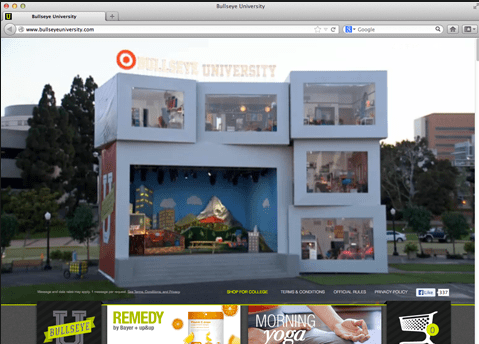
It can be difficult for companies to reach Millennial shoppers. The media and Internet-savvy generation can be skeptical of marketing claims, preferring to use their own eyes and contacts to decide on purchases. This generation is used to shopping, living, communicating, and doing virtually everything online. Companies that want to reach this target market cannot depend on drawing them to their stores, but instead need to go directly to where the market lives. So, Target decided to go to the college students on their own turf and set up a four-day shoppable event featuring five popular YouTube personalities living in “Bullseye University” dorm rooms. From July 15 – 18, the five ‘students’ lived in a fishbowl and acted out college life scenarios.

To run the event, Target constructed a college dorm in Los Angeles to show off its back-to-school products and get young shoppers interested in the store’s offerings. In the custom-designed dorm rooms, five social media celebrities –  Chester See, Meekakitty (aka Tess Violet), Magic of Rahat, Jenn Im of Clothes Encounters, and Brooke “Dodger” Leigh – became dorm-mates with a live video stream of their actions and interactions with the public. What was in their rooms? Target’s products, of course. By scrolling over the rooms, and clicking on the various rooms and items, viewers could interactively shop and purchase items directly from the site.

If it sounds a little like MTV’s Real World, it does have similarities as Target attempts to penetrate the digital universe of university students. Target wanted to move beyond commercials and ads and focus on the tactics that resonate the most with younger shoppers.

Is it worth it? Yes. The National Retail Federation estimated that back-to-college spending will yield $45.8 billion in sales, second only to the Christmas shopping season.  The average spending for dorm rooms will cost students an average of $104 on bedding, appliances, and supplies. Welcome back to school!

Group Activities and Discussion Questions:

1. Start with a discussion about shopping for supplies as a university student.

2. Poll students: What did they buy for returning to college? How much did they spend? What influenced their purchases?

3. Next, show the Target site and videos: http://abullseyeview.com/target-video-bullseye-university-back-to-college/

4. Divide students into groups. Have each group discuss how similar promotions could be developed for other milestones and special shopping occasions. (Ex: Weddings, births, birthdays, holidays, etc.)

5. Have teams define the target market, product mix, and how to promote the shoppable events.

Source:  Minneapolis Business Journal

Leave a comment

Filed under Classroom Activities

Click-to-Buy hits the Target

3


Marketers have longed for the day when consumers could watch a TV show, see a product they liked, and then easily purchase it. The Internet and e-commerce have made their wishes come true. Viewers can now watch a video online and click on the item of their dreams.

Target recently debuted its first series of films designed for immediate Internet shopping. The films star famous actors Kristen Bell, Nia Long, and Zachary Abel in a series of vignettes designed to relate to the lives of working consumers. The branded entertainment videos are a series of romantic comedy films set at the actual Target Corp. headquarters in Minneapolis, Minn. The films highlight beauty, home, and fashion and help to extend Target’s fall marketing campaigns.

The short films are filled entirely by Target items, including housewares, home furnishings, and fashion. When viewed online, shoppers can immediately click on items, see the price and product specifications, and add items immediately to their shopping carts, all without interrupting the story. The story does not focus on the products, but does show viewers how Target’s products can be incorporated into the average home – and then shows how the average home is worthy of being in a TV comedy.

The future of Internet shopping has arrived. All a customer has to do is view, click, and buy.

Group Activities and Discussion Questions:

1. Discuss e-commerce for marketing and sales.
2. Show the Target videos: http://fallingforyou.target.com/
3. Additional videos:
http://youtu.be/liggIsuQDJA

http://youtu.be/XqIUuCjgD9A

http://youtu.be/PYqkb2yBAGs

http://youtu.be/93VkvPBqRtY

4. Discuss how the videos can be used to increase awareness and sales.
5. Ask students which products they might consider purchasing?
6. Divide students into groups. Have each group storyboard a video for a retailer to encourage consumer buying of that retailer’s products. (Ex: Home Depot, Williams Sonoma, etc.)

Source:  New York Times, Minneapolis Business Journal, other news sources, 9/26/12

Leave a comment

Filed under Uncategorized