
Tag Archives: target markets

Dove’s Real Beauty Campaign – plus a Parody (for men)

2

Dove claims that only four percent of women worldwide consider themselves to be beautiful. To counteract this, Dove has been running a “Real Beauty” campaign featuring real women showing their true, natural beauty. The tagline of the campaign – “You are more beautiful than you think” – is aimed directly at countering the misperception by many women that unless they can live up to an idealized super-model image, they are less than beautiful.

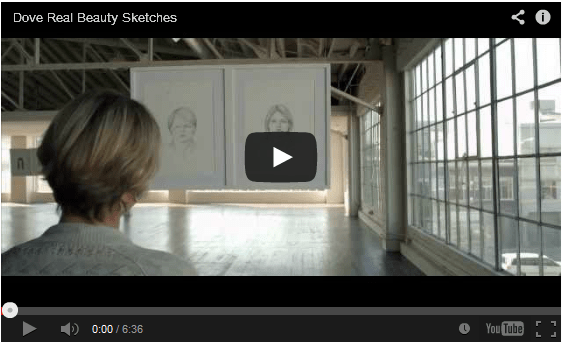
The video begins by having women describe themselves to a FBI-trained forensic artist, who then draws their portraits according to their own descriptions; the artist never sees the women, only uses her words to complete the drawing. This is followed by having these same women sketched according to descriptions given by someone who just met her for the first time that day. The difference between the two drawings is significant, as is the real emotion expressed by the women who see then see their real beauty through the eyes of strangers.

It’s a moving campaign that brings women to reconsider their true beauty and essence, making women wonder if they judge themselves too harshly.

Group Activities and Discussion Questions:

1. There are a number of videos that have been produced by Dove about the topic of real beauty for women. View these to help put the “real beauty” campaign into a larger context being used by the company.http://youtu.be/litXW91UauEhttp://youtu.be/m0JF4QxPpvMhttp://youtu.be/lg_jbSP-F2o2. What are the key messages from these videos? Who is Dove’s target market? How effective do students think these videos are in the marketplace?
3. Show video where women describe themselves and are drawn by a forensic artist. Then others describe the women to the artist – and a very different person emerges: http://youtu.be/XpaOjMXyJGk  (Note: this video went viral in a matter of days and quickly amassed more than 54,000,000 views.
4. Finally – to get students laughing, show the parody video where men describe themselves, and then are described by women: http://youtu.be/T8Jiwo3u6Vo5. Student teams: Could this approach be used by other beauty products?
6. Dove’s Web site has videos and additional images: http://realbeautysketches.dove.us/

Source:  Brandchannel. com, Ad Age Daily, other news sources
 

Leave a comment

Filed under Classroom Activities

Starbucks in China

7

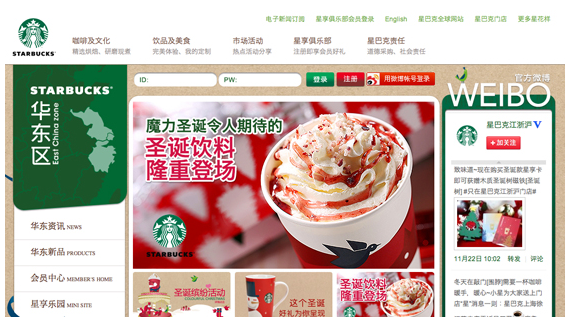
China is too big a market for U.S.-based companies to ignore. While it presents a very different culture – along with marketing challenges that accompany that culture – many companies have been working hard on expansion into the growth market. Among the companies working on reaching China’s 1.3 billion consumers is Starbucks. With 700 stores already in place, the company has been in China for 13 years and is about to ratchet up its efforts to get the Chinese people embrace its products. Starbucks plans to double its store-front locations to 1,500 in the next three years and the company expects China to become its second-largest market by 2014.

Although coffee sales increased 20% in 2011, China is not known for its coffee consumption. Starbucks has been adjusting its menu to carry more tea drinks as well as local food items such as Hainan chicken and rice wrap, shredded ginger pork panini, and red bean frappaccios.

In addition to food changes, the company also has to address cultural issues in China. For example, while the U.S. has a “grab and go” mentality to coffee, Chinese customers tend to linger for hours over food and drink. Starbucks is viewed as a place to socialize; most Chinese visit in large groups or pairs, requiring larger community tables, couches and armchairs. Starbucks’ baristas also need to teach customers about the products and drinks.

Group Activities and Discussion Questions:


  1. Discuss the need for U.S. firms to expand into new global markets.
  2. What attributes do companies need to successfully navigate different cultures?
  3. Divide students into teams. Have them examine the U.S. offerings from Starbucks.
  4. Next, have teams develop a marketing research plan for examining Chinese customs and tastes.
  5. Finally, what should a Starbucks store in China look like? How should employees act?
  6. Discuss key issues that need to be handled with international expansion.

Source:  Wall Street Journal, Ad Age Daily, Brandchannel.com, other news sources

Leave a comment

Filed under Classroom Activities

What Marketers Need to Know about the Global Market

5

It’s a big world of opportunity for companies seeking global markets, particularly for U. S. firms who are looking for expansion overseas. What is it that marketers and companies need to know about global markets and need to keep in mind for their strategic marketing plans? Put your list together, and then compare it with the one developed by Ad Age Daily.

  1. Advertising globally is a $500 billion market.
  2. Advertising growth is 3.9% in 2012 and 2013 worldwide.
  3. Worldwide ad spending is at an all-time high and is expected to set new records each year through at least 2017.
  4. Regional spending is mixed. Advertising is Asia/Pacific and Latin America is growing, but U.S. spending will not pass the 2007 peak until 2015.
  5. Emerging markets will pass the U.S., accounting for roughly one-third of ad spending.
  6. Brazil, Russia, India, and China (BRIC) account for nearly 50% of the emerging market ad spending, with China close behind the U.S.
  7. Digital spending is one in five ad dollars, with Internet media achieving nearly 20% of the 2013 spending.
  8. TV’s portion or global ad spending will hold steady through 2015 at about 40%.
  9. There are 43 companies spending more than $1 billion globally on media.
  10. Personal care is the world’s largest ad category; automotive and food follow closely behind.

And the three largest global advertisers? Proctor & Gamble, Unilever, and L’Oreal.

Group Activities and Discussion Questions:

  1. Start by discussing the overall requirements for global marketing. Ask students to list items that are critical to global growth.
  2. Review the list of items in the class. Discuss how each of these might be applied by U.S. companies seeking global markets.
  3. Divide students into teams. Have each team select a product and then develop a global advertising strategy.
  4. What are critical issues to address?
  5. What research is required to develop a campaign?

Source:  Ad Age Daily, 12/10/2012

Leave a comment

Filed under Classroom Activities