
Monthly Archives: May 2013

Timing is Everything – Same Day Delivery

3

If you think the battle for retail has been fierce so far, you ain’t seen nothing yet! The next battle-front will be in online retail and will feature same-day delivery service. Amazon has been testing same-day delivery in several large cities already, and now Google Shops is getting ready to join the action.

Why so much attention? According to Forrester Research, e-commerce sales will reach more than $327 billion by the year 2016, and consumers will be purchasing everything from low-dollar items such as shampoo and toothpaste, to luxury items costing well into the thousands of dollars (and soon, even cars will be purchased online). This means that quickly getting the goods to consumers is a critical value-added feature in the competitive online retail world.

Google Shopping Express is now being tested in the San Francisco Bay Area and includes same-day delivery on items purchased from retailers including Target, Walgreens, Staples, and more. The new service will rival Amazon’s popular Amazon Prime, but at a reportedly lower rate.

Google Shopping differs from Amazon in that Google does not warehouse inventory, but instead depends on retail partners to fill the orders. Google takes the order and collects payments; retailers get a valuable portal to Google’s vast user base.

More companies are entering this new same-day delivery arena: Start-up company Shutl (www.shutl.com) will soon be operating in New York, San Francisco, and Chicago. The service ideas are not new, but recent technology innovations have brought these into the realm of possibility. The question is the consumer – is same-day delivery worth a premium?

Timing is everything.

Group Activities and Discussion Questions:

1. Start with a discussion of supply chain and its importance in marketing.
2. Bring up Google’s Shopping Express site and discuss benefits/risks: http://www.google.com/shopping/express/about/3. Next, bring up Shutl’s site and discuss how the company will operate: www.shutl.com.
4. Have students diagram a supply chain/distribution model for products such as soda, bread, shoes, books, music, and furniture.
5. What is the timeline for these deliveries?
6. How does same-day delivery impact the consumer? How does same-day delivery impact the retailer?
7. Divide students into teams. Have each team develop a promotion that can keep consumers coming to brick-and-mortar stores.
8. Conversely, have each team develop a promotion to get consumers to shop online more frequently.

Source:  Brandchannel.com, Ad Age Daily, 3/6/13
Leave a comment

Filed under Classroom Activities

Dove’s Real Beauty Campaign – plus a Parody (for men)

2

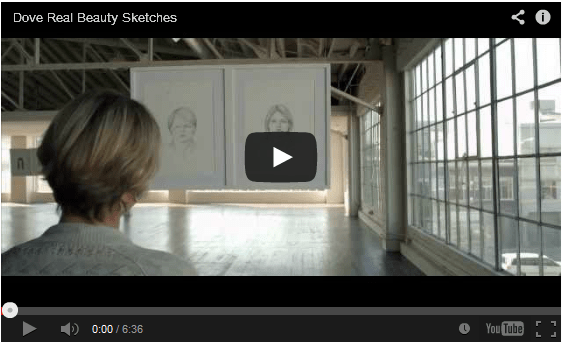
Dove claims that only four percent of women worldwide consider themselves to be beautiful. To counteract this, Dove has been running a “Real Beauty” campaign featuring real women showing their true, natural beauty. The tagline of the campaign – “You are more beautiful than you think” – is aimed directly at countering the misperception by many women that unless they can live up to an idealized super-model image, they are less than beautiful.

The video begins by having women describe themselves to a FBI-trained forensic artist, who then draws their portraits according to their own descriptions; the artist never sees the women, only uses her words to complete the drawing. This is followed by having these same women sketched according to descriptions given by someone who just met her for the first time that day. The difference between the two drawings is significant, as is the real emotion expressed by the women who see then see their real beauty through the eyes of strangers.

It’s a moving campaign that brings women to reconsider their true beauty and essence, making women wonder if they judge themselves too harshly.

Group Activities and Discussion Questions:

1. There are a number of videos that have been produced by Dove about the topic of real beauty for women. View these to help put the “real beauty” campaign into a larger context being used by the company.http://youtu.be/litXW91UauEhttp://youtu.be/m0JF4QxPpvMhttp://youtu.be/lg_jbSP-F2o2. What are the key messages from these videos? Who is Dove’s target market? How effective do students think these videos are in the marketplace?
3. Show video where women describe themselves and are drawn by a forensic artist. Then others describe the women to the artist – and a very different person emerges: http://youtu.be/XpaOjMXyJGk  (Note: this video went viral in a matter of days and quickly amassed more than 54,000,000 views.
4. Finally – to get students laughing, show the parody video where men describe themselves, and then are described by women: http://youtu.be/T8Jiwo3u6Vo5. Student teams: Could this approach be used by other beauty products?
6. Dove’s Web site has videos and additional images: http://realbeautysketches.dove.us/

Source:  Brandchannel. com, Ad Age Daily, other news sources


Leave a comment

Filed under Classroom Activities

French Literacy Campaign

1

Marketing is key not only to promoting and selling commercial products, but it is also critical to building awareness for social issues and can help motivate people to do good deeds. A recent French campaign for literacy is an eye-catching promotion that makes a viewer do a double-take and view an advertisement in a new way. In this campaign, the images look like high fashion, but their appeal is for more than generating revenue.

The campaign won the prestigious ‘Yellow Pencil’ award from the Designers and Art Directors Club (D&AD) – one of the highest honors in the annual awards show. View the ads and see the campaign for yourself. Then, think about how this approach might be used for other public service awareness campaigns.

Group Activities and Discussion Questions:

1. Discuss the impacts of literacy in terms of a global economy.
2. Show the advertising series in class:
http://www.huffingtonpost.com/2013/04/18/literacy-campaign-poster-award_n_3112109.html3. Are these effective ads? Why or why not?
4. Divide students into teams. Have each team select a non-profit or public interest topic to address.
5. What are key messages that would be effective? Target audience to reach with the campaign?
6. Finally, have students create storyboards or ads.

Source:  Huffington Post, 4/18/13


Leave a comment

Filed under Classroom Activities