Monthly Archives: September 2017

Logos with Meaning

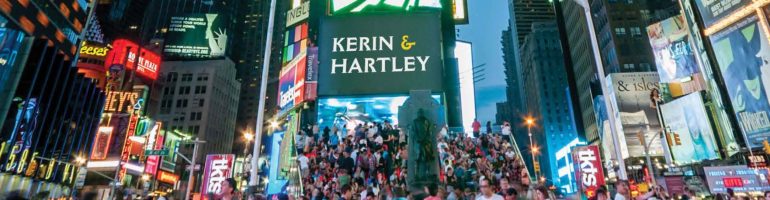
Logos and branding surround us. Without even realizing it, consumers see an estimated 5,000 to 10,000 ads per day. Yes, that sounds like a lot, but start counting how many ads you see and hear starting when the alarm clock goes off – bet you get tired of counting by time you get to breakfast!

Logos are a big part of how brands penetrate the consciousness of consumers. A strong logo should be simple, singular, recognizable, and represent the brand attributes. Many logos have deeply rooted meanings that portray the brand’s history and values. Consider the following examples:

  • Beats by Dre: Represents a human head wearing earphones.
  • Amazon: A yellow line links A to Z.
  • Tour de France: A cyclist as the letter R, and the yellow wheel representing racing during the day.
  • BMW: The colors of the Bavarian flag are in the logo.
  • Tostitos: See the people represented by the middle Ts share a bowl of salsa.

How many different logos do you see right now?

Group Activities and Discussion Questions:

  1. Poll students – how many logos do they see in a day?
  2. Now, have each student count the number of logos that they are carting around today. Include backpacks, clothing, electronics, etc. Add the number from each student and see how big the count is at.
  3. Discuss the importance of logos in branding efforts.
  4. Do a Web search for articles that discuss logos. One such article: https://designschool.canva.com/blog/hidden-meanings-behind-50-worlds-recognizable-logos/
  5. Divide students into teams. Have each team design a new logo for a product of their choice.
  6. Debrief by having each team show its logo. Have a class vote on a favorite.

Source:  CBS News, New York Times, other news sources

Leave a comment

Filed under Classroom Activities

Careful What You Name Your Company

Names and labels are critical in consumer goods. Consumers demand transparency and authenticity – we want to know that companies are telling the truth and fulfilling their brand promises.  One brand currently under fire is Nestlé’s Waters’ Poland Spring Bottled Water.

A class action lawsuit for $5 million has been filed against Poland Spring for false advertising, deceptive labeling, breach of conflict, and other claims. The lawsuit argues that the company has misled consumers by labeling the product as “100% spring water,” thus suggesting that the water is high quality. It claims that “not one drop” of the water complies with the FDA’s definition of what constitutes spring water, and is instead considered “ground water.”

The FDA says spring water “shall be collected only at the spring or through a bore hole tapping the underground formation feeding the spring.” Consumers claim that the Poland Spring in Poland Spring, Maine went dry decades ago. Nestle said the “claims made in the lawsuit are without merit” and that they meet the FDA regulations, as well as all federal and state regulations.

What’s in your water?

Group Activities and Discussion Questions:

  1. Bring a few bottles of Poland Spring Water to class.
  2. Pass them around to students and see what conclusions the students have about the product.
  3. Next, have students look up the FDA definition of spring water. (https://www.fda.gov/food/resourcesforyou/consumers/ucm046894.htm)
  4. Does it comply with how the product is packaged and advertised?
  5. Show video: http://fortune.com/2017/08/17/nestle-poland-spring-water-lawsuit/
  6. Have students review the company’s Web site for information: https://www.polandspring.com/
  7. What course of action should the company take to reassure consumers and regain trust?

Source:  Fortune

Leave a comment

Filed under Classroom Activities

Hurricane Harvey Relief Efforts

Listening to the recent news of the disaster in Texas from Hurricane Harvey, it is easy to become overwhelmed by the scope of the devastation and needs of those affected by the storm. Hurricane Harvey released more than 24.5 trillion gallons of rain, devastating communities and displacing thousands of families and businesses.

But, it is often in times of greatest need that people and companies join together to help those who need it most, without asking for anything in return. Companies are providing money, food, water, donations, and solutions around the area. Some examples:

  • Anheuser-Busch stopped beer production in Georgia to instead produce more than 155,000 cans of water to areas affected by Harvey.
  • Kroger Foundation committed to $100,000 to the Houston Food Back and is donating $5 for every retweet of #KrogerCares.
  • Google pledged $2 million and is also providing urgent information to those in impacted areas, creating a real-time crisis map to help those on the ground.
  • CVS pharmacy is moving its mobile pharmacy trailers into the area to help people with medications, in addition to monetary donations.

It doesn’t stop with companies. Many celebrities and athletes have donated money directly and through foundations to help Texas residents.

Does this surprise you? It shouldn’t. Roughly 89% of global citizens think companies should use their unique abilities and assets to lend assistance during a disaster.

It feels good to help.

Group Activities and Discussion Questions:

  1. Discuss with students the social responsibilities that companies have to the public. What is their opinion?
  2. Should companies publicize their contributions?
  3. Divide students into teams. Have each team research online the level of support that has been donated by companies.
  4. One list can be found at https://youtu.be/hANXIPxN1ME
  5. Build a list on the white board of the companies, donation amount, and items.
  6. Discuss the role of crisis communication during dire times.

Source:  Texas Tribune, CNN, CNBC, New York Times, other news sources

Leave a comment

Filed under Classroom Activities