Monthly Archives: December 2014

Viral Videos in December, 2014

Videos

Every week Advertising Age, in conjunction with company Visible Measures, publishes a list of the top performing videos. The weekly chart highlights viral video ads that appear on online video sites. Each ad measures viewership of brand-syndicated video clips as well as social video placements that are driven by viewers around the world. True Reach™ quantifies the total audience that has been exposed to a viral video campaign.

There are three key factors for viral video success:

  1. Reaching the tastemakers.
  2. Building a community of participation.
  3. Creating unexpectedness in the video.

Regardless of the type of product or service, the country of origin, or the type of message, what matters most to companies is reaching the audience in a way the both entertains and informs. Check out this week’s top videos and discuss how they address the factors for viral success.

Group Activities and Discussion Questions:

  1. Bring up Ad Age’s weekly Viral Video chart: http://www.visiblemeasures.com/adage
  2. Have students examine how the ads are measured by Visible Measures.
  3. Divide students into teams. Have each team select an ad on the top video chart and analyze the ad.
  4. Discuss: What is unusual? Who will it interest? What is the key message? How effective is the ad at getting the company’s brand and message across to viewers?
  5. In teams, have students design a viral video for a product of their choosing. What are the elements that are needed to go viral?

Source: Advertising Age, Visible Measures – weekly update

Leave a comment

Filed under Classroom Activities

Seeing More than the Bottom Line – Donating 1,000,000 Eyeglasses

Darby

Warby Parker, known for its hipster styled eyeglasses and unique online shopping model, also is a great example of a corporation acting on its social responsibility. The company recently announced that it has sold – and also distributed free of charge – 1,000,000 pairs of eyeglasses through its one-for-one model. The model is similar to that of TOMS Shoes, which donates a pair of shoes to those in need for every pair sold to consumers.

Warby Parker partner in the venture is nonprofit VisionSpring. Based on the number of glasses sold each month, Warby Parker makes the equivalent monetary donation to partners such as VisionSpring, who then trains local residents on how to administer eye exams and sell low-cost eyewear to the community.

VisionSpring focuses on the impact that vision and glasses have on society. The organization estimates that 90% of those living with uncorrected vision are in the developing world and that glasses have the potential to increase productivity by 35% and increase monthly income by 20%. That’s a bottom line we would all like to see.

Group Activities and Discussion Questions:

  1. Show the Warby Parker Web site: warbyparker.com
  2. Show the VisionSpring Web site: http://visionspring.org/
  3. Discuss the business model used by Warby Parker. Why is it successful?
  4. Also discuss corporate social responsibility and Warby Parker’s commitment to promoting good vision.
  5. Show videos:

http://youtu.be/a1PTDXOgIF0

http://youtu.be/5Ox2L05rTC0

http://youtu.be/9OZBlBdJvPk

  1. Divide students into teams. Have each team select a common product and then design a similar social responsibility program for it. (Ex: Toothpaste, detergent, medicine, clothing, etc.)

Source: Brandchannel.com

Leave a comment

Filed under Classroom Activities

Bigger Billboards are Better

Billboards

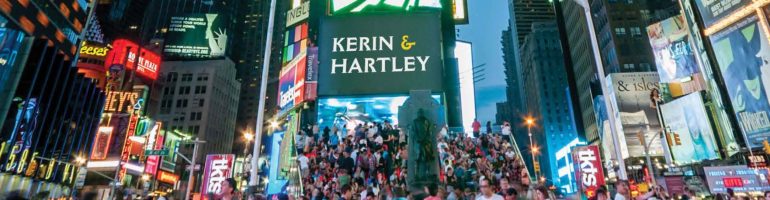
Is bigger always better? Countering the trend towards smaller digital screens is the largest and most expensive digital billboard in Times Square, New York. It is tough to see it all in a single glance – the new screen is eight stories tall and nearly as long as a football field, spanning the entire block from 45th to 46th Streets on Broadway. With nearly 24 million LED pixels, the display has better resolution than any top-of-the-line TV set.

Going along with the bigger screen is an equally big price – $2.5 million for four weeks. And the first renter of the space is equally big – Google will be the exclusive advertiser with a campaign that runs through the end of January. Speaking of big, more than 300,000 pedestrians enter the Times Square area each day while another 115,000 drivers/passengers pass through the area by car and bus. The location is a prime tourist destination and photo opportunity. Even more people see the scene when the area is part of big events such as the New Year’s Eve celebration. More than 1.5 million impressions are generated each day in Times Square.

Billboards are gaining new traction with marketers as new social media and mobile tactics allow viewers to engage with marketing such as broadcasting their faces on billboards or download coupons after walking past an ad. Spending on outdoor advertising in the U.S. is expected to be $7.2 billion.

Group Activities and Discussion Questions:

  1. Discuss the use of billboards in a media mix. When is it a good tactic, and not a good tactic?
  2. Bring up information about Times Square digital billboards: http://www.timessquarenyc.org/advertising-sponsorships/index.aspx#.VHu0rck-fy1
  3. Also show the Web site for Outdoor Advertising Association of America to gain additional insights into different forms of outdoor ads: http://www.oaaa.org.
  4. Have students use their laptops to bring up various billboards in Times Square. Discuss the elements that make the billboards effective and memorable.
  5. Divide students into teams. Have each team select a product or company and design a billboard for a digital display.

Source: New York Times

Leave a comment

Filed under Classroom Activities