
Monthly Archives: September 2013

Pay Attention to Women!

3

Sneaker enthusiasts aren’t just men, but we’d never know that based on the product design and selection. In fact, collecting sneakers can be both a passion as well as a lucrative business, for both women and men. Limited edition sneakers can be sold for thousands of dollars more than originally paid and collectors are highly competitive when trying to get the latest trainers!

Although sneakers aren’t just for men, sizes and styles definitely tend to favor the males. While athletic shoe trainers might seem to be unisex, men’s sizes do not fit women’s feet. (Ask students if they would wear sneakers built for the opposite gender.) No longer is it ok to just make a product pink and narrow in order to get women to buy it. Today’s women want the same sneakers that are available for men.

To help showcase the topic, the founders of Purple Unicorn Planet developed a Web site that showcases cool men’s style sneakers, and encourages women and men to tweet their need for change. The founders’ main statement: “Somewhere in Swoosh Central, there’s been an oversight.” Their goal is to influence companies to make more of the male trainers available to females. Using a unique Twitter campaign, the founders hope to influence not only Nike, but other athletic shoe makers to make the same colors available to females.

Group Activities and Discussion Questions:

  1. Discuss the differences between genders when developing products and marketing campaigns. What is similar for men and women? Different?
  2. To learn more about sneakerheads, show the video on sneaker collectors: http://youtu.be/9QNsOy-b5Pw
  3. View the Purple Unicorn Planet Web site: http://purpleunicornplanet.com/
  4. Discuss the marketing strategy grid with respect to this topic. What products and markets could be used in each section of the grid relative to this topic?
  5. Are there examples of other products that are targeted to one gender more than the other? What is the opportunity that is being missed by companies? What can be done to expand to a new target market?
  6. Divide students into teams. Have each team select a product usually bought by one gender, and redesign the product and campaign for the other gender.

Source:  Brandchannel.com
Leave a comment

Filed under Classroom Activities

September 2013 – YouTube Trends Map

2

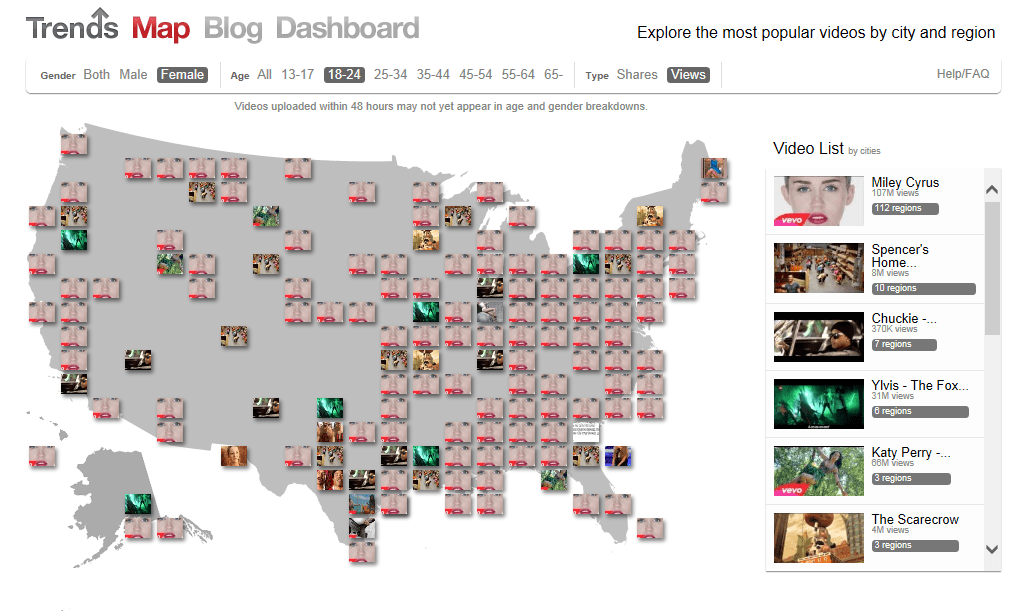
Everyone is familiar with YouTube, and likely we all watch a video or two nearly every day (go ahead, admit it). In fact, the video-sharing site averages more than one billion viewers each month! But the videos we watch vary by age, gender, geography, and more. The most popular video watched by men is likely not the same as the most popular video watched by women. And don’t forget about variations in culture across the U.S. The viewers in New York have very different habits than do viewers in Texas.


YouTube posts a daily trends map based on demographics as reported by its account holders. Rankings are based on the number of views and can be separated by age, gender, and location. Through the aggregated data, YouTube Trends show us the most popular video in real time and gives ideas about trends that are developing within the YouTube viewing community. The map is a visual representation of the most viewed videos over the past 24 hours across the U.S.


Before you look at it, take a guess. What do you think the most popular, trending videos are this week? Then click on the interactive map to discover trends and viewing behaviors.

Group Activities and Discussion Questions:

  1. Poll students: What are the YouTube videos they watch the most?
  2. What videos do they think are more popular for men vs. women? By various age groups?
  3. Bring up the YouTube trends map: http://www.youtube.com/trendsmap
  4. Divide students into teams. Have each team select a specific target market and geography and view the most popular videos in that area.
  5. Discuss how this information can be used by marketers.

Source:  YouTube.com

Leave a comment

Filed under Classroom Activities

September 2013 Viral Videos

1

Every week Advertising Age, in conjunction with company Visible Measures, publishes a list of the week’s top performing videos. The weekly chart highlights viral video ads that appear on online video sites. Each ad measures viewership of brand-syndicated video clips as well as social video placements that are driven by viewers around the world. (A measurement called True Reach™ quantifies the total audience that has been exposed to a viral video campaign. The measurement combines data from brand-driven seeded video placements with results from community-driven viral video placements – spoofs, parodies, mashups, and more.)

There are three key factors for viral video success:

  1. Reaching the tastemakers.
  2. Building a community of participation.
  3. Creating unexpectedness in the video.

Regardless of the type of product or service, the country of origin, or the importance of the message, what matters is reaching the audience in a way the both entertains and informs.

Check out this week’s top videos and discuss what makes them “go viral.”

Group Activities and Discussion Questions:

  1. Bring up Ad Age’s weekly Viral Video chart: http://www.visiblemeasures.com/adage
  2. Have students examine how the ads are measured by Visible Measures.
  3. Divide students into teams. Have each team select an ad on the top video chart and analyze the ad.
  4. What is unusual?
  5. Who will it interest?
  6. What is the key message?
  7. How effective is the ad at getting the company’s brand and message across to viewers?
  8. In teams, have students design a viral video for a product of their choosing. What are the elements that are needed to go viral?

Source:  Advertising Age, Visible Measures – weekly update

Leave a comment

Filed under Classroom Activities