
 Although online retail sales continue to grow, it still only represents about 5.4% of all shopping in the U.S. This is one of the factors that can drive Web-based businesses into the world of brick-and-mortar stores. Other factors include distribution, high demand, fashion, and the customer’s desire to physically touch the merchandise. Online vendors can do great business, but are only reaching 85% of all shoppers. That’s a lot of market to ignore and Internet-based businesses are taking notice and moving to the physical world.
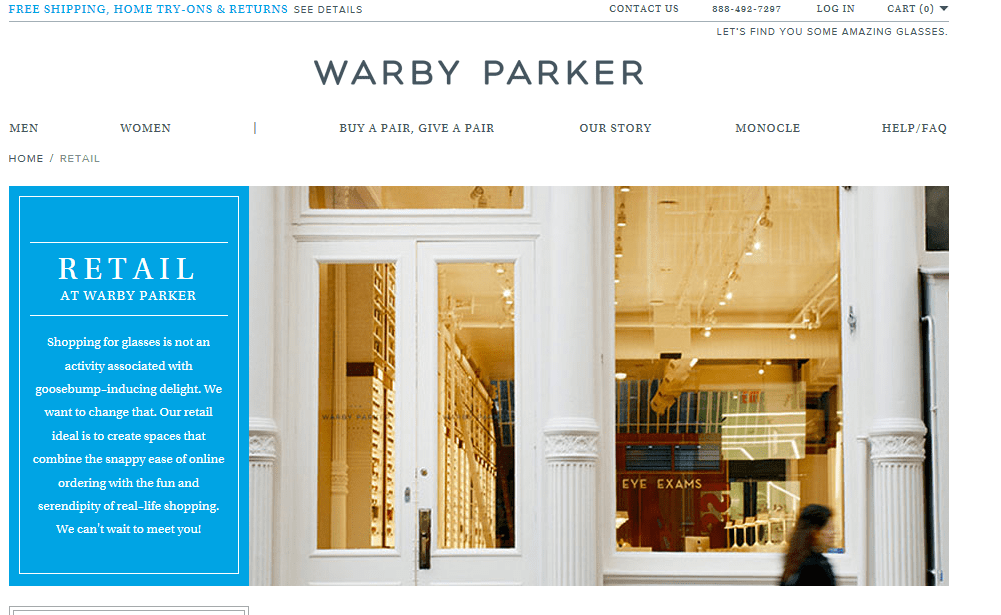
Example: These factors helped pushed Internet-based eye wear vendor Warby Parker to move from their online store to establishing physical locations using showrooms, pop-ups, and mobile trucks, and finally a permanent store front in New York. Warby Parker has joined other Internet vendors into the physical store arena – Piperlime (owned by Gap) also has a store in New York where it offers some of the clothing sold on its Web store.
The upside for vendors is that when they can get shoppers touching the product and interacting with their employees, it helps build a strong brand experience in the consumer’s mind. Companies are finding that consumers who make a first purchase in the store are likely to make future purchases online. It’s a win for the Internet and a win for the brick-and-mortar stores – giving retailers and consumers the best of both worlds.
Group Activities and Discussion Questions:
- Start with a discussion of online shopping vs. brick-and-mortar shopping. Have students list 10 factors that influence the location of their shopping.
- What are advantages of retailers that only online? Brick-and-mortar? What are disadvantages?
- Bring up Warby Parker’s and Piperlime’s Web site: http://www.warbyparker.com, http://www.piperlime.com.
- Discuss Warby Parker with students: Key message, target market, value, company strategy, pricing, etc.
- Divide students into teams: Have teams research online and examine other online-only businesses. What are factors that the company should consider for moving to physical locations?
- Have each team select an online business and develop a marketing plan for moving the business to brick-and-mortar. How can this integrate with the company’s online store?
Source: Brandchannel.com, 5/28/13


