
Tag Archives: digital marketing

How Anthropologie Is Redefining Its Brand for Gen Z

What happens when a luxury lifestyle brand becomes the butt of a viral TikTok joke and then turns it into a marketing win? Anthropologie’s playful reaction to the “$1,000 rock” trend did more than earn laughs. It highlighted how the brand has evolved from a millennial favorite to a savvy multi-brand powerhouse resonating with Gen Z.

Under CEO Tricia Smith, Anthropologie has leaned into digital storytelling and self-aware humor to refresh its boho-chic image. When a TikTok user jokingly unboxed a rock she claimed was from Anthropologie, the brand didn’t retreat, it joined in the fun and showed a marketing strategy built on authenticity and agility. Smith’s team had been investing in digital marketing infrastructure to ensure they could respond to viral moments in real time, and it paid off.

Beyond viral content, Anthropologie is reinventing its merchandising and retail strategy. It’s growing a family of sub-brands including Maeve, now its own standalone label, that appeal to younger consumers seeking stylish, versatile pieces at approachable prices. These owned brands now make up 71% of Anthropologie’s business, a signal that private labels can drive both creativity and profit.

The company’s approach shows that modern brand strategy isn’t simply about chasing trends, it’s about building an ecosystem of experiences, products, and stories that evolve alongside the customer. For marketing students, Anthropologie demonstrates how to blend merchandising, brand identity, and digital connection to stay culturally relevant and achieve growth.

Discussion Questions and Activities:

  1. Why was Anthropologie’s humorous TikTok response an effective digital marketing strategy? Watch a video explanation of the rock prank here: https://www.youtube.com/watch?v=wZuCr1v1yj0
  2. Listen to The Fake Anthropologie Rock that Fooled Boyfriends Everywhere on NPR’s All Things Considered. https://www.npr.org/2025/09/26/nx-s1-5553476/the-fake-anthropologie-rock-that-fooled-boyfriends-everywhere
  3. How do sub-brands like Maeve help Anthropologie target new customer segments?
  4. What risks come with relying heavily on private label products?
  5. How does Anthropologie’s in-store experience complement its digital marketing?
  6. What lessons can other brands learn about adapting to generational shifts?
  7. Brand Voice Challenge. Students create sample social media responses for a viral moment involving a brand.
  8. Sub-Brand Strategy Map. Teams design a sub-brand concept for Anthropologie targeting Gen Alpha.
  9. Merchandising Makeover. Groups reimagine an Anthropologie store layout to reflect current Gen Z values (sustainability, inclusivity, experience).

Sources:

Venkat, Mia (26 Sep 2025), The fake Anthropologie rock that fooled boyfriends everywhere, NPR. Waldow, Julia (25 Sep 2025), Anthropologie’s Candan Erenguc on what’s next for Maeve and other owned brands, The Business of Fashion. Milnes, Hilary (29 October), How Anthropologie Conquered Millennial Cringe, Vogue Business.
Leave a comment

Filed under Classroom Activities

TOMS Marketplace – Shopping with a Cause

2

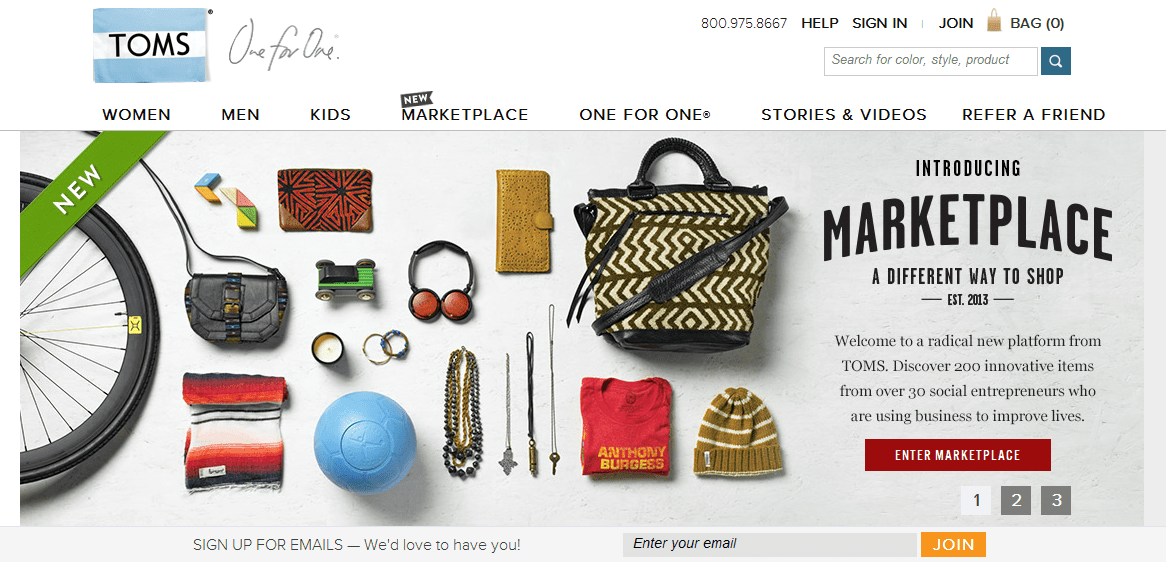
TOMS is a familiar brand to many college students. Since the company’s founding in 2006 through its one-for-one program, it has donated more than 10,000,000 pairs of shoes to those in need! In 2011, the company expanded its mission and introduced an additional product line of sunglasses where the sales contribute to eye care, prescription glasses, and medical treatment around the world. And now, just in time for Christmas shopping, TOMS has launched another socially-conscious retail program – called TOMS Marketplace – selling 200 products from 30 different companies.

The products range from $5 to $500 and all products are obtained wholesale by TOMS from the social startups that manufacture them in communities around the globe. The marketplace is a little different from other TOMS offerings – it is focused on emerging companies, products, causes, and the idea that business has a responsibility to improve lives of those in need. Some of the featured products provide jobs and economic opportunities to people who might otherwise not be employed; other products use proceeds to support education, fight hunger, or improve lives.

The main premise of TOMS and its new Marketplace is the company’s belief that everyday purchases can positively impact lives and create sustained change. Customers can choose to shop by product, brand, cause, or region. This puts dollars to work directly in the areas that matter most to the shoppers.

Group Activities and Discussion Questions:

  1. Poll students. How many have heard of TOMS or purchased TOMS shoes?
  2. Of those who have purchased from TOMS, ask why they did so.
  3. Show the video and Web site: http://www.toms.com/marketplace
  4. Have students review the site. What are the main messages, products, and target market?
  5. Divide students into teams. Have each team create a marketing campaign for TOMS Marketplace.
  6. Another task for students: take the TOMS business model and adapt it for other companies. What companies could use this? Why? How?

Source:  New York Times, Brandchannel.com, 11/5/13

Leave a comment

Filed under Classroom Activities

Marketing on Facebook

Facebook is the biggest of the social media marketing outlets, and with the company’s recent $104 billion initial public offering in May, the attention has gotten even more intense regarding the value of the company to not only investors, but also to marketers.  Although Facebook is the top visited Web site in the U.S., it has yet to fully realize its potential in advertising. This became very clear when General Motors announced in May that it is eliminating its display advertising on Facebook, citing a lack of measurable results from the campaigns. (Estimates are that GM spent roughly $10 million, out of a total $1.78 billion marketing budget, on Facebook ads last year.)

This brings up the topic of how companies should best use Facebook as part of their promotional tool box. For many companies, just having a brand presence with their own Facebook page may be enough to help promote the company. For other companies, sponsored ads seem to work fine. The difficulty comes from measuring the effectiveness of the ads, and the return on investment for the placements.

Group Activities and Discussion Questions: 

  1. Watch a Bloomberg video clip that discusses the pros and cons of advertising on Facebook: http://bloom.bg/J06RzM
  2. What are the best uses of Facebook for companies? What does not work when advertising on Facebook?
  3. Divide students into groups. Have each group select a company to examine its profile and advertising on Facebook. (Possible companies to examine include GM, Amazon, McDonalds, Proctor & Gamble, Coca Cola, Audi, etc.)
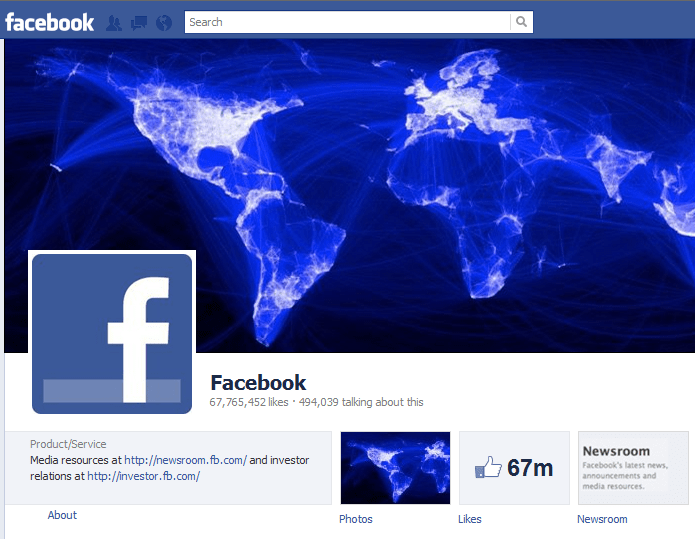
  4. What is the content on the Facebook pages? What is the main message? The target audience?
  5. In teams, have students develop a strategy for how these companies could use Facebook ads to be more effective in the marketing programs.

Source:  Ad Age Daily, Business Week, Bloomberg News and other media outlets, 5/18/12

Leave a comment

Filed under Classroom Activities