Monthly Archives: June 2012

More Viral Videos

Watching viral videos on the Web never gets old. Every week marketers and advertisers try to find that elusive formula of creativity and promotion that will help launch their new video into the high reaches of the blogosphere. Many try, few are chosen. As has been discussed on this site in previous postings, there are three key factors for viral video success:

  1. Reaching the tastemakers
  2. Building a community of participation
  3. Creating unexpectedness in the video

Regardless of the type of product or service, the country of origin, or the importance of the message, what matters is reaching the audience in a way the both entertains and informs.

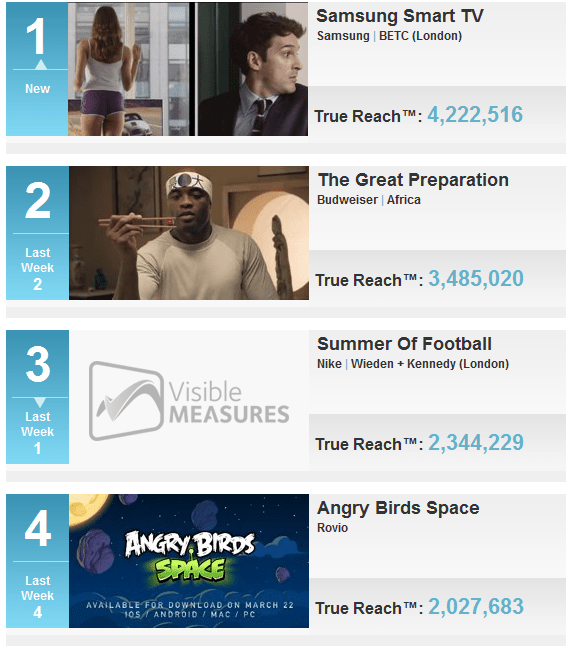
Every week Advertising Age, in conjunction with company Visible Measures, publishes a list of the week’s top performing videos. The weekly chart highlights viral video ads that appear on online video sites. Each ad measures viewership of brand-syndicated video clips as well as social video placements that are driven by viewers around the world. (A measurement called True Reach™ quantifies the total audience that has been exposed to a viral video campaign. The measurement combines data from brand-driven seeded video placements with results from community-driven viral video placements – spoofs, parodies, mashups, and more.)

Check out this week’s top videos at http://www.visiblemeasures.com/adage
 

Group Activities and Discussion Questions:

  1. Bring up Ad Age’s weekly Viral Video chart: http://www.visiblemeasures.com/adage
  2. Have students examine how the ads are measured by Visible Measures.
  3. Divide students into teams. Have each team select an ad on the top video chart and analyze the ad.
  4. What is unusual?
  5. Who will it interest?
  6. What is the key message?
  7. How effective is the ad at getting the company’s brand and message across to viewers?
  8. In teams, have students design a viral video for a product of their choosing. What are the elements that are needed to go viral?


Source:  Advertising Age – weekly update each Thursday morning
Leave a comment

Filed under Classroom Activities

Ask Siri

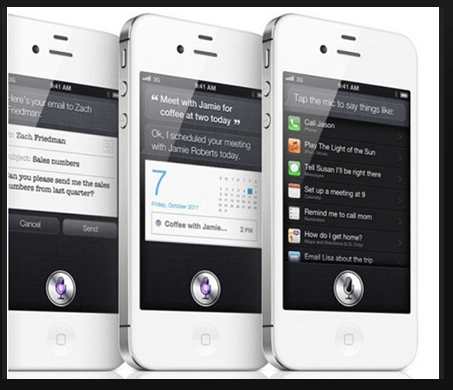
Apple’s iPhone 4S, with the Siri voice activation system, continues to increase its market share. In the first quarter of 2012, Apple had revenue of nearly $13 billion in the U.S., more than $10 billion in China, and $8.8 billion in Europe. A lot of that revenue was due to their latest phone with the entertaining voice of Siri fronting for an artificial intelligence system that tries to answers the users’ queries.

The problem with Siri is that it only speaks a few select languages – English, German, Japanese, and French. But what happens if you speak only Spanish – spoken by approximately 3.5 million people in the U.S. – or Mandarin – spoken by one-third of the world’s population? Well then, for now you are out of luck and will have to interact with your smart phone the old-fashioned way – using text!


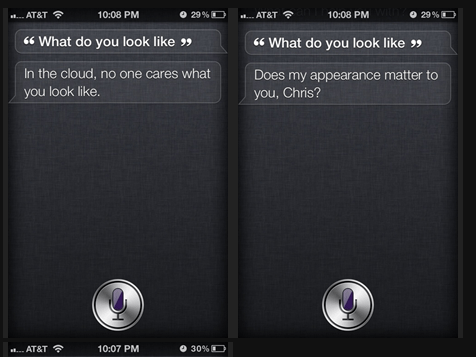
What are some to craziest things asked of Siri? According to App Chronicles (http://appchronicles.com/10/top-10-funniest-questions-to-ask-siri) among the top questions are:

  1. How much wood could a woodchuck chuck if a woodchuck could chuck wood?
  2. Tell me a joke.
  3. Where do babies come from?
  4. Knock, knock…
  5. What do you look like?
  6. What is the meaning of life?
  7. I need to hide a body…
  8. Who’s your daddy?
  9. Will you marry me?

According to Apple, Chinese, Korean, Italian and Spanish language options are in the works for 2012. Let the questions begin!

Group Activities and Discussion Questions:

  1. Play several current commercials for iPhone 4S (find commercials on www.youtube.com, search term “iPhone Siri”).
  2. Ask students if anyone has an iPhone with Siri.
  3. What are the craziest things that they have asked Siri, and what were the responses?
  4. Ask students to make a request of Siri in another language. What happens?
  5. Divide students into groups. Have each group design a promotion that could be used with Siri speaking the new languages – Chinese, Korean, Italian, and Spanish.
  6. What are areas of concern as Apple launches into these new languages? What are the cultural considerations to take into account?


Source:  Ad Age Daily, 5/16/12


Leave a comment

Filed under Classroom Activities

Updating Cadillac’s Image


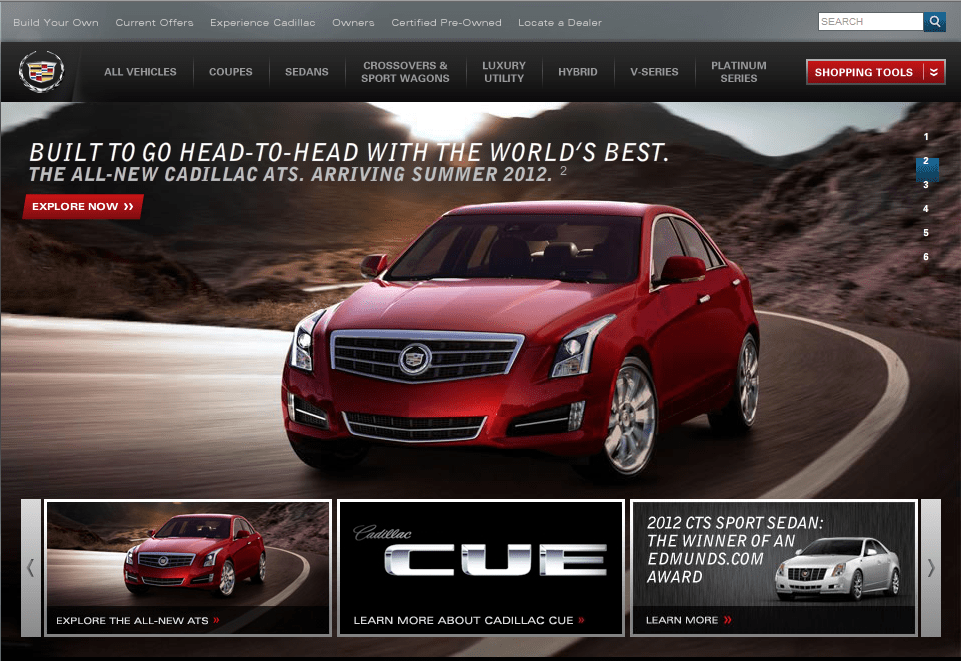
The Cadillac brand of automobiles has long held a high-end position in the U.S. automotive market. But in the past few years, the brand’s image has morphed into one for an older generation of automotive buyers. In other words – the kind of car that grandpa might drive, not the kind of luxury car that a young, hip, professional drives.

Unit sales of Cadillac have reflected this image; sales declined nearly 35% from a peak level in 2005 of 235,000 automobiles to 152,400 automobiles in 2011. When compared to the volume of BMW sales of 248,000 automobiles last year, Cadillac definitely has some work to do to catch up. The top four German automotive manufacturers – BMW, Mercedes, Audi, and Porsche –together account for nearly 40% of luxury car sales.

To help bring Cadillac to a younger generation, the company recently hired The Fallon Agency of Minneapolis, Minn. (Fallon has a well-known reputation in the auto industry from their work in 2001 for BMW. That work created a series of short films which were directed by top directors including John Woo, Guy Ritchie and others, and starred Hollywood actors Clive Owen and Madonna among the actors. ) Fallon staffers did extensive research of Cadillac buyers and fans, as well as researching the luxury car market including features such as drive stability, performance, and acceleration.  The new advertising campaign is scheduled to launch this summer in conjunction the Summer Olympics to be held in London.

Group Activities and Discussion Questions:

  1. Have students view advertising for several luxury brands of cars – BMW, Mercedes, Lexus, Buick, Cadillac, Acura, Audi, etc. (Ads can be found on www.youtube.com.)
  2. Next, have students view the Web sites for the same car brands.
  3. What are the main messages that these ads are conveying? What is the target market for each brand?
  4. Break students into discussion groups. Have each group come up with key messages and promotion ideas to move Cadillac into a new, younger demographic market. What tactics and messages would they use?
  5. View the BMW Films series of videos produced by Fallon in 2001. These are no longer available from BMW, but they can be found on www.youtube.com – search term “BMW Films The Hire.”
  6. How did these videos position BMW in the marketplace? What are the key messages and the target market for the videos?

Source:  Minneapolis Star Tribune, 5/27/12

Leave a comment

Filed under Classroom Activities