

Monthly Archives: January 2012

Are you smart enough to segment a market?


One size does not fit all. Not for clothes. Not for cars. And now, not for soft drinks either.

Marketers know that identifying a target market is critical to success. But not all companies have the guts to clearly go after a single segment and risk alienating the broader market. Dr. Pepper is taking that risk and is betting big. Their new target market for their diet soft drink is men. Not girls, not kids, not grandparents – they want Men (with a capital M) to drink Dr. Pepper Ten.

Dr. Pepper is taking note of the increasing size of men’s waistlines, and is targeting their diet soda directly to them, using advertisements that appeal to the tough-guy mentality. Men between the ages of 25 and 34 say they need to make healthier choices in sodas, but don’t like the usual diet pop taste or image.

Chicks needs not apply (but are still welcome to buy the product)!

Group Activities and Discussion Questions:

  1. Show a video clip of a Dr. Pepper Ten commercial. These can be found on www.youtube.com, use Dr. Pepper Ten as search term. http://youtu.be/3iuG1OpnHP8
  2. Ask students to identify three products that are aimed only at men, but that women buy also.
  3. Next, take a common household product (i.e., laundry detergent, toothpaste) and ask them how they would change the elements in the marketing mix to target the product specifically to men.
  4. Have students discuss the risks and benefits of targeting a sole gender with a broad-based product. When is it a good idea? When is it a bad idea?

Sources: Advertising Age, Brandchannel.com
Leave a comment

Filed under Classroom Activities

Can I drive you to this sale?

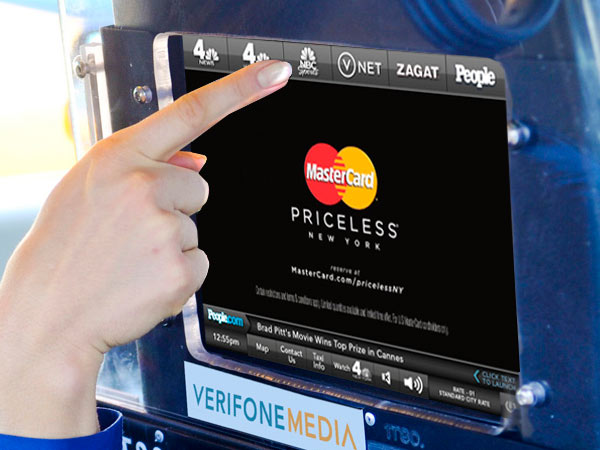
Look around any major metropolitan city and you see taxi cabs. What if marketers could actually use these taxi rides to sell their products to riders? Want a coupon for 20% off dinner tonight? How about a movie? Want to go there now?


VeriFone Media operates in thousands of cabs around the country. In New York City, the capability is in 6,800+ cabs – providing a large captive audience for viewing promotions, local programming, and products. With the capability of recognizing specific geographies and times of day, the advertising can be targeted to meet specific needs of the riders. (Or maybe just annoy the riders.)


Verifone also has a video advertising product that is used at gas pumps. This gives a one-on-one experience at the pumps, changeable by time of day, location, and promotion.


Group Activities and Discussion Questions:

  1. Ask students to consider the ads that are currently placed on taxi cabs in their city. What have they seen? Are these effective ads?
  2. Ask students to identify the different market segments who ride in taxis. What do these segments want from a taxi ride?
  3. Have students visit the VeriFone Web site to learn more about the strategy for the product. http://www.verifonemedia.com/vnet/taxi.aspx
  4. Also have students review the gas pump product – At the Pump – and discuss pros and cons.
  5. What are the limitations for these types of promotion?
  6. What are the benefits for these mediums?
  7. What are products that could use these types of promotion?
  8. How would they deploy these advertising media in an integrated marketing plan?

Sources: Advertising Age, New York Times, VeriFone Media


Leave a comment

Filed under Classroom Activities

When does re-branding make sense?


Americans love our brands. We can picture the logos, the products, and the tag lines. We also don’t like change. Remember what happened a few years ago when Gap changed their logo? They quickly changed it back when customers complained loudly about the change – they liked the old logo and the brand promise they got from Gap. Will the results be different for another iconic American brand of J.C. Penney?

In the case of J.C. Penney, the change is about more than just a brand logo; it carries over into the product selection, and perhaps most importantly to cash-strapped consumers, the change carries into pricing. The company recently announced that it will significantly cut both inventory and prices – doing away with confusing sales and coupons, and simplifying the product lines. Instead of confusing sale days and discounts, the company will have three tiers of pricing: “fair and square” pricing (general everyday), “monthly value discounts”, and “best price” (clearance on the first and third Fridays of the month.

Wait – is this really simpler? Is it a significant change? I’m still confused.


Group Activities and Discussion Questions:

  1. Ask students if they have shopped at J. C. Penney? Why or why not?
  2. Have students view the J. C. Penney ads on their YouTube channel – http://www.youtube.com/user/jcpenney?blend=1&ob=0
  3. What is the key message from the company?
  4. Have students compare one or two items (i.e., blue jeans) at several retailers:
    • Wal-Mart, Sears, J.C. Penney, and Target
    • What are the differences in prices? Promotions?
  5. What market segment does J. C. Penney target? Are they alone in targeting this segment?
  6. How does the new pricing change the brand and perception?
  7. What are the various pricing models being used by J.C. Penney?


Sources: Advertising Age, Brandchannel, NY Times, Minneapolis Star Tribune

Leave a comment

Filed under Classroom Activities